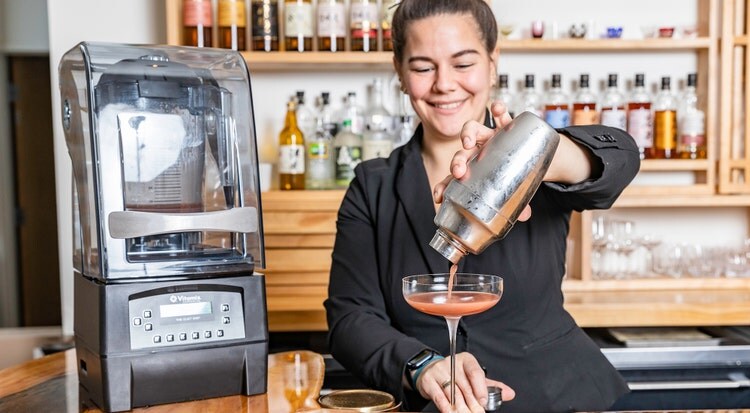
Commercial Cocktail Blenders: A Bartender’s Buying Guide
A commercial cocktail blender can play an important role behind the bar, from producing frozen cocktails during a rush to preparing purées, syrups, and other ingredients before service. Choosing the right equipment means looking beyond whether a blender can simply process ice. Bartenders and operators also need to consider speed, consistency, noise, capacity, controls, durability, cleaning, and how the equipment fits into the workflow of the bar.
The right bartender blender ultimately depends on the operation. A high-volume front-of-house bar may prioritize rapid blending and noise reduction, while a cocktail program focused on prep may need versatility for processing fresh ingredients and batches. Understanding these differences can help operators select equipment that supports both the menu and the realities of daily service.
Key takeaways
- A commercial cocktail blender should be selected for the demands of professional bar service, including drink volume, ice processing, consistency, durability, and cleaning.
- Features such as programmable controls, manual speed settings, sound management, and container design can affect both bartender workflow and the guest experience.
- The best blender for a bar depends on where it will be used and what it needs to make, from frozen cocktails to purées, syrups, foams, batches, and zero-proof drinks.
- Vitamix Commercial offers several blender configurations for beverage service and bar preparation, allowing operators to match equipment to their menu and workflow.
What is a commercial cocktail blender?
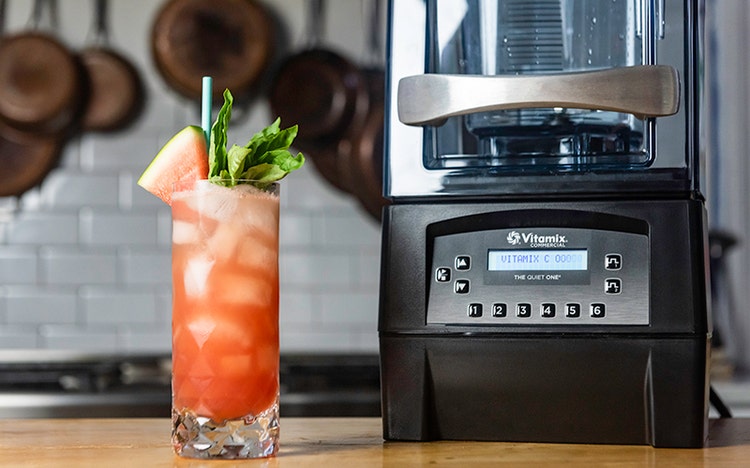
A commercial cocktail blender is a blender designed for the repeated beverage and ingredient-preparation demands of professional foodservice. Behind a bar, it may be used to make frozen cocktails, process fruit and herbs, prepare cocktail components, or support batch production.
Commercial use places different demands on equipment than occasional blending at home. A bartender blender may need to process ice repeatedly during a busy service period, deliver similar results from one order to the next, and fit into a compact workstation where speed and ease of cleaning matter. Depending on its location, noise can also be an important consideration.
The term therefore covers more than one type of bar application. Some commercial blenders are optimized for beverage production, while others are particularly useful for ingredient preparation. The appropriate choice depends on what the bar intends to make and how the blender will be incorporated into service.
Commercial cocktail blenders vs. household blenders
Commercial cocktail blenders are designed around professional workflows and repeated use. Household blenders, by comparison, are generally intended for domestic preparation rather than the operating conditions of a commercial bar.
For bartenders, that distinction can become especially important during peak service. Frozen cocktails may require repeated processing of ice and other ingredients, while a prep station may need to produce multiple batches of purées or other components. Commercial equipment should be evaluated for those expected workloads rather than selected solely on the basis of familiar household features.
Controls and workflow can differ as well. Programmable beverage equipment can help standardize common recipes, while manual variable-speed controls can give bartenders or prep teams more direct control over texture. Features such as sound enclosures and container designs intended for beverage service can also be valuable in commercial environments.
What to look for in a commercial cocktail blender
Selecting a commercial cocktail blender starts with the work it needs to perform. Operators should consider the entire process, including ingredient preparation, blending, pouring, cleaning, and preparing for the next order.
Power and ice-crushing performance
Ice is central to many blended cocktails, making ice-processing capability an important consideration. A commercial blender should be appropriate for the types of frozen beverages on the menu and the frequency with which they are ordered.
Power alone should not be treated as the only measure of suitability. Operators should consider how effectively the complete blending system processes the ingredients used in their recipes and whether it can support their expected service volume.
Speed, capacity, and drink consistency
A blender needs to keep pace with the bar. During busy periods, cycle time and practical container capacity can affect how quickly bartenders complete orders and move to the next ticket.
Consistency matters at the same time. Customers should receive a similar texture and finished drink regardless of which bartender prepares the order or how busy the bar becomes. Equipment, recipes, ingredient measurements, and operating procedures all contribute to that repeatability.
Programmable controls and manual speed settings
Programmable controls can be useful for frequently ordered drinks because bartenders can use established blending programs rather than manually managing every cycle. This can support repeatability while allowing staff to perform other tasks during the blend.
Manual speed settings serve a different purpose. They give the operator direct control over processing, which can be valuable for specialty recipes, ingredient preparation, and applications where texture needs to be adjusted by the bartender or prep team.
The right approach depends on the menu. Some bars benefit primarily from programmable beverage production, while others need greater manual flexibility.
Noise reduction for front-of-house bars
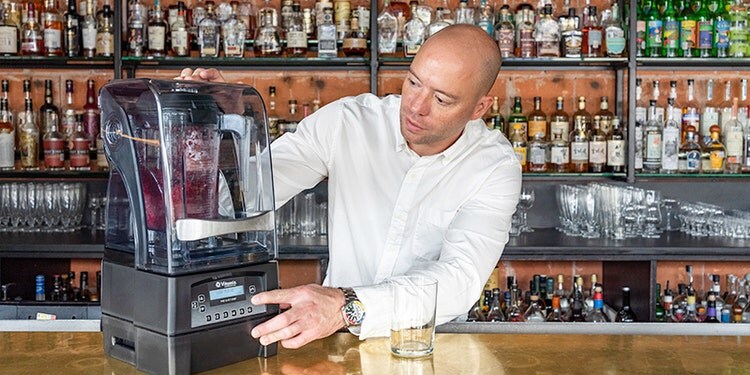
Blender noise is particularly relevant when equipment is positioned close to customers. In cocktail bars, restaurants, hotels, and similar settings, repeated blending can compete with conversation and the atmosphere operators are trying to create.
For these environments, a commercial blender designed with sound management in mind can be a practical choice. A sound enclosure may be especially useful when frozen or blended beverages are a regular part of front-of-house service.
Container design and pourability
Container design affects everyday bartender workflow. A container should make it practical to load ingredients, blend the intended recipe volume, pour the finished product, and clean the equipment for its next use.
Pourability is particularly important for beverage applications. Operators should consider how easily staff can transfer a finished cocktail into serving glassware and whether the container size suits typical recipes and batches.
Durability, cleaning, and maintenance
Commercial bar equipment needs to withstand repeated use while remaining practical to clean and maintain. A blender that performs well but creates unnecessary cleaning complexity can slow down service.
Operators should consider routine cleaning requirements as well as the components that may require inspection or eventual replacement. Establishing maintenance procedures and keeping commonly needed replacement items available can help reduce disruption.
How to choose a bartender blender for your operation
The best bartender blender is the one that matches the bar's actual workflow. Cocktail volume, menu composition, equipment location, available space, and expected use should all influence the decision.
Consider your cocktail volume and service speed
Start with demand. A bar producing blended beverages throughout a busy service has different requirements from one making a limited number of frozen cocktails each evening.
Consider both average volume and peak periods. Equipment needs to support the moments when the bar is busiest, when delays can quickly affect ticket times and bartender workflow.
Choose between front-of-house and back-of-house blending
Location changes the priorities for blender selection. Front-of-house equipment operates near guests, so sound level, speed, footprint, and ease of operation may receive greater emphasis.
Back-of-house equipment can serve a different role. If the blender is primarily used for prep, the operation may prioritize flexibility for purées, syrups, batches, and other cocktail ingredients rather than sound reduction during guest-facing service.
Some cocktail programs may benefit from separating these functions, using beverage-focused equipment at the bar and a versatile prep blender elsewhere.
Match the blender to your menu
Review what the blender will actually make. A menu built around frozen cocktails places different demands on equipment than a craft cocktail program using a blender primarily for fresh ingredients and prep.
Operators should also consider future menu development. A blender that accommodates several relevant applications may give beverage teams more flexibility as seasonal drinks and new recipes are introduced.
Account for bar space and electrical requirements
Bar space is often limited, so dimensions and placement need to be considered before purchasing equipment. Operators should evaluate the blender's footprint in relation to bottles, ice wells, sinks, glassware, and other essential tools.
Electrical requirements should also be verified for the intended installation. Product specifications and site requirements should be checked for the specific blender under consideration rather than assumed to be interchangeable across models.
Evaluate long-term cost and reliability
Purchase price is only one part of equipment cost. Operators should also consider expected workload, maintenance, replacement components, downtime, and how effectively the blender supports service.
Reliable equipment can be particularly valuable when blended beverages represent a meaningful portion of sales. A blender failure during peak service can remove menu items from availability or force staff into slower workarounds.
Vitamix commercial blenders for cocktail programs
Vitamix Commercial offers multiple blending solutions relevant to cocktail programs. The appropriate model depends on factors including beverage volume, equipment location, desired controls, noise considerations, and whether the blender will primarily support drink production or ingredient preparation.
Specific specifications and installation requirements should always be confirmed on the current product page before selecting equipment.
Quick & Quiet for fast, quiet beverage blending
Quick & Quiet is positioned for commercial beverage blending where both speed and sound management are important considerations. For bars serving blended cocktails in guest-facing environments, this combination can support a workflow focused on efficient beverage production while limiting the impact of blending noise.
Operators considering Quick & Quiet should review the current Vitamix Commercial product specifications to determine whether its configuration and capabilities match their volume, recipes, and installation.
The Quiet One for high-volume front-of-house bars
The Quiet One is designed for commercial beverage environments where noise reduction is a priority. That makes it relevant for front-of-house cocktail programs where blending takes place near guests and repeated blender noise could affect the atmosphere.
For bars with substantial blended-beverage demand, operators can evaluate The Quiet One in the context of their service volume, menu, available space, and desired programming capabilities.
Touch & Go Advance for consistent, lower-volume service
Touch & Go Advance offers an option for beverage operations that want programmable blending and consistent preparation without necessarily requiring the same setup as a higher-volume front-of-house application.
For cocktail programs with a defined group of blended recipes, programmable operation can help bartenders reproduce established preparation processes across shifts.
Drink Machine Advance for programmable frozen drinks
Drink Machine Advance is oriented toward commercial beverage preparation and programmable operation. It can be considered by bars that regularly produce frozen cocktails and want repeatable blending processes for established recipes.
Programming can be particularly useful when the same drinks are ordered frequently. Standardized recipes and blending procedures can help reduce variation during service.
Drink Machine Two-Speed for simple manual control
Drink Machine Two-Speed provides a more straightforward manual approach for beverage blending. For operations that prefer simple controls rather than a larger set of programmable functions, a two-speed configuration can fit established workflows.
The appropriate choice still depends on drink volume, recipes, and staff needs. Operators should compare the model's current specifications with their intended use.
Vita-Prep 3 for craft cocktail ingredients and batch preparation
Vita-Prep 3 is particularly relevant when the blender's role extends into preparation. Craft cocktail programs often need to process fruits, herbs, and other ingredients used in house-made components and batches.
A prep-focused blender can help beverage teams develop these ingredients before service rather than relying exclusively on the blender stationed at the bar. This distinction can be useful for operations with substantial cocktail mise en place or more complex beverage menus.
What can bartenders make with a commercial blender?
Commercial blenders can support much more than the familiar frozen cocktail. Depending on the equipment and recipe, they can become part of both service and prep.
Frozen cocktails and granitas
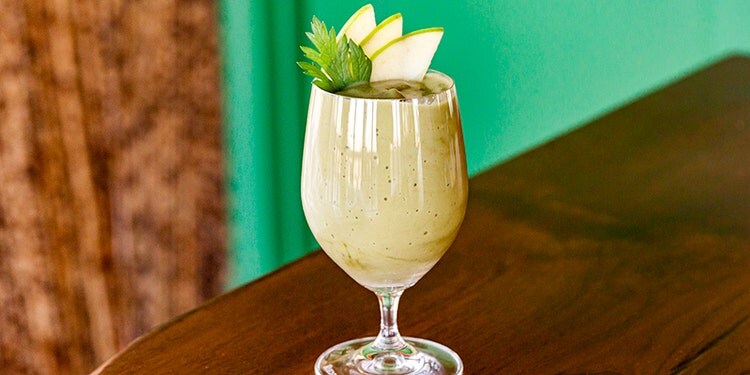
Frozen cocktails are one of the most recognizable bartender blender applications. The blender combines ice and liquid ingredients into the texture required for drinks such as frozen margaritas, daiquiris, and other blended recipes.
Granitas and similar frozen preparations can also broaden the range of textures available to beverage teams.
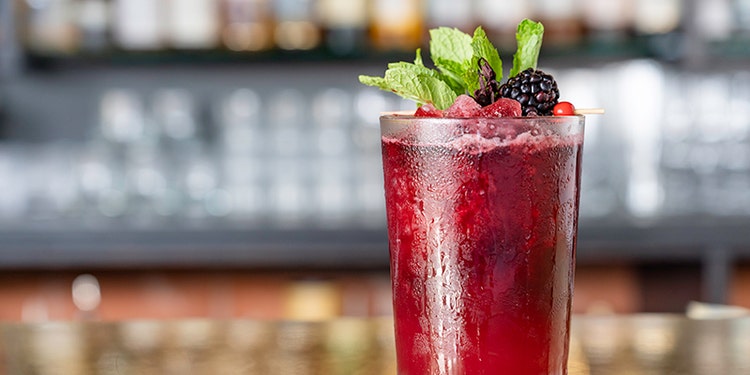
Fruit and herb purées
Fresh fruit and herb purées can provide flavor, color, and texture for cocktail recipes. A commercial prep blender allows bar teams to process ingredients in advance and establish a repeatable preparation method.
The finished result will depend on the ingredient, recipe, processing method, and desired texture, so bartenders should develop procedures appropriate for each component.
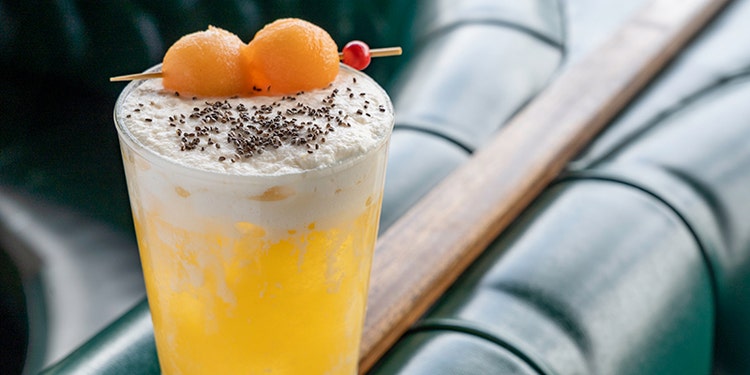
Cocktail syrups, infusions, and foams
Blenders can support preparation of selected syrups, infusions, foams, and related cocktail components when the recipe and equipment are appropriate for the application.
For craft beverage programs, bringing multiple preparation tasks into a consistent workflow can make it easier to reproduce house-made ingredients across batches. Food-safety requirements and appropriate preparation procedures should be followed for each recipe.
Batched cocktails
Batching can move selected preparation tasks out of active service. A commercial blender may support the preparation of certain batched cocktail components or recipes, depending on their ingredients and required texture.
Accurate recipes, portioning, storage, and food-safety practices remain important. The blender should be treated as one part of a broader batch-production process.
Zero-proof cocktails
Zero-proof menus can benefit from many of the same blending techniques used in alcoholic cocktails. Fruit, herbs, ice, house-made components, and other ingredients can be processed to create varied textures and flavor profiles.
A versatile commercial blender can therefore support both alcoholic and nonalcoholic beverage development without requiring bartenders to approach the two categories as entirely separate production systems.
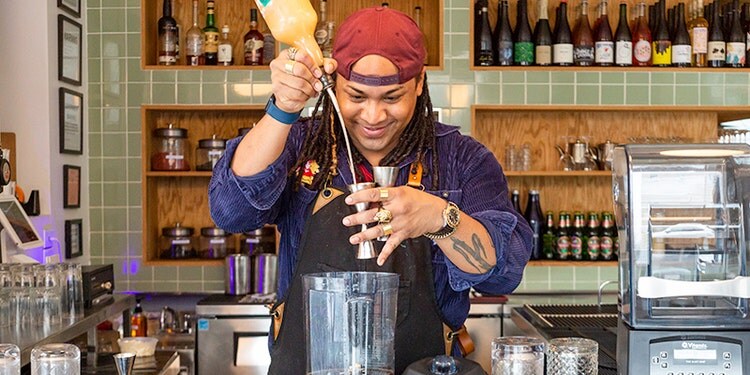
How the right blender can improve bar operations
Blender selection affects more than the finished drink. When equipment is aligned with the menu and service model, it can support repeatability, bartender productivity, ingredient management, and menu development.
Deliver more consistent drinks
Consistency depends on recipes, measurements, ingredients, technique, and equipment. A suitable commercial blender can help standardize the processing portion of that equation.
Programmable blending can be especially useful for recurring recipes, while well-defined manual procedures can support consistency for applications requiring bartender control.
Increase speed of service
Efficient blending helps reduce the time bartenders spend completing each blended order. The benefit becomes more important during peak periods when several drink tickets may arrive simultaneously.
Speed also includes the tasks around the blend itself. Convenient controls, practical containers, straightforward pouring, and efficient cleaning can all contribute to a smoother workflow.
Reduce ingredient waste
Consistent recipes and preparation processes can help bars control portions and use ingredients more predictably. Appropriate container sizing and repeatable procedures can also help teams prepare quantities that better reflect expected demand.
Waste reduction still depends on broader inventory and production practices, including purchasing, storage, forecasting, and staff training. Blender workflow can support those efforts rather than replace them.
Expand your cocktail menu
A commercial blender can give beverage teams additional ways to develop drinks and ingredients. Frozen cocktails are one opportunity, but purées, batches, zero-proof beverages, and other preparations can also expand the menu.
The most useful additions are those that fit the bar's concept and can be executed consistently during service. Equipment should enable menu development without creating unnecessary operational complexity.
How to care for a commercial cocktail blender
Routine care helps keep commercial blending equipment ready for service. Operators should follow the cleaning, inspection, operating, and maintenance guidance provided for their specific Vitamix Commercial model.
Clean the blender between uses
Cleaning procedures should be incorporated into the bar's normal workflow. Containers and other applicable components should be cleaned according to manufacturer instructions and the operation's sanitation requirements.
Between-use procedures are especially important when moving between recipes, including when allergens or strongly flavored ingredients are involved.
Inspect containers, blades, and drive sockets
Regular inspection can help staff identify wear or damage before it causes a larger service problem. Containers, blade assemblies, drive sockets, and other applicable components should be checked according to manufacturer guidance.
Components showing signs of damage or excessive wear should be addressed rather than allowed to remain in service indefinitely.
Prevent overheating during high-volume service
Commercial equipment should always be operated within the manufacturer's instructions. During demanding service periods, staff should follow the recommended operating practices for the specific blender rather than improvising procedures intended to increase throughput.
If overheating or another operating issue occurs, consult the applicable product documentation for the correct response.
Keep replacement containers and parts available
Downtime can be particularly disruptive when a bar depends on its blender for core menu items. Keeping appropriate replacement containers or commonly needed service parts available can help an operation respond more efficiently when maintenance is required.
Operators should use components approved for the specific model and follow Vitamix Commercial guidance for replacement and service.
Find the right Vitamix commercial blender for your bar
Choosing a commercial cocktail blender comes down to matching equipment to the realities of the operation. Consider how many blended drinks the bar produces, whether the blender will sit near guests, which recipes and prep tasks it needs to handle, how much workspace is available, and which controls best suit the team.
Vitamix Commercial offers beverage and prep blending options for different cocktail-program needs, from guest-facing frozen drink production to craft ingredient preparation. Comparing those needs against current product specifications can help operators identify the most appropriate solution.
Explore Vitamix Commercial blending products to compare options for your bar or beverage program.
Frequently asked questions about commercial cocktail blenders
What is the best blender for a commercial bar?
The best blender for a commercial bar depends on the menu, drink volume, equipment location, available space, and desired controls. High-volume front-of-house bars may place greater emphasis on beverage speed and sound reduction, while craft cocktail operations may prioritize versatility for ingredient preparation. Equipment should be evaluated against the bar's specific workload rather than selected according to a single feature.
How powerful should a commercial cocktail blender be?
A commercial cocktail blender should have a blending system suited to the ingredients, recipes, and volume the bar expects it to handle. Motor specifications can be useful when comparing equipment, but power ratings alone do not determine real-world performance. Operators should consider the complete system and verify current manufacturer specifications for the intended application.
Can a commercial blender crush ice continuously?
Commercial blenders designed for frozen beverages can be appropriate for repeated ice-processing applications, but operating limits vary by model. Bars should follow the manufacturer's instructions for use, duty requirements, recipes, and operating procedures rather than assume any blender can process ice continuously without limitation.
Do bartenders need a sound enclosure?
Not every bartender needs a sound enclosure. It can be particularly valuable when a blender operates front of house near customers, especially when blended drinks are ordered frequently. In a back-of-house prep area where noise has less effect on the guest experience, sound reduction may be a lower priority.
How long does a commercial blender last?
There is no single useful lifespan for every commercial blender because longevity depends on workload, application, operating practices, cleaning, maintenance, and component wear. Operators should inspect and maintain equipment according to manufacturer guidance and address worn components as needed.
Can a commercial cocktail blender be used for food prep?
Some commercial blenders can support both beverage and food-preparation applications, but suitability depends on the specific model and task. For cocktail programs, food-prep capabilities can be useful for purées, herbs, and other house-made components. Operators should confirm that the intended application is appropriate for the specific blender and follow applicable food-safety and manufacturer guidance.