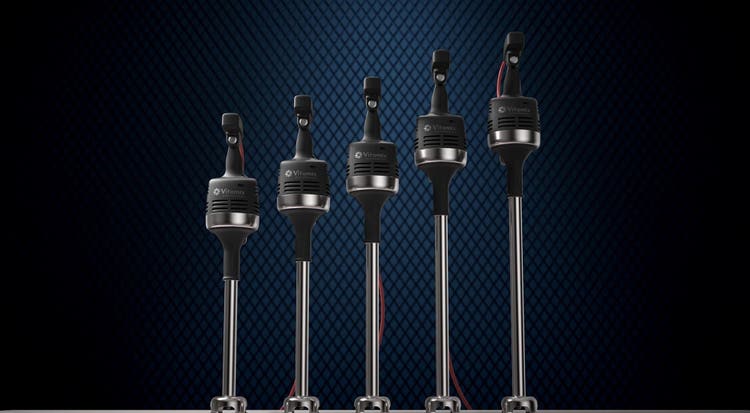
Best Commercial Blenders for High-Volume Foodservice
In a high-volume foodservice operation, blending equipment has to do more than produce a good result once. It needs to deliver consistent texture and quality across repeated blends, withstand demanding service periods, fit efficiently into established workflows, and support the range of recipes an operation prepares every day.
That makes choosing a commercial food blender an operational decision as much as an equipment purchase. A smoothie shop processing orders throughout the morning rush has different needs from a restaurant using a blender for sauces, purées, dressings, and prep work. Bars may prioritize frozen-drink consistency and speed, while institutional kitchens may need larger batch capacity and flexible texture control.
The best commercial blender for a particular operation is therefore the one that matches its volume, menu, workspace, labor model, and service expectations. Understanding the features that matter most can help foodservice operators make a more informed choice and get greater value from their equipment over time.
Key takeaways
- Commercial food blenders are designed for the workload, repetition, and operating conditions found in professional foodservice environments.
- High-volume operations should evaluate motor performance, container durability, controls, cleaning requirements, noise, capacity, and service support rather than selecting equipment on power alone.
- The right blender depends heavily on application. Beverage stations, bars, restaurant kitchens, institutional operations, and large-batch prep environments may require different combinations of capacity, programmability, noise reduction, and texture control.
- Daily volume, menu requirements, available space, employee workflow, maintenance needs, and total cost of ownership should all factor into the final equipment decision.
What is a commercial food blender?
A commercial food blender is a blending machine designed for repeated use in professional kitchens and beverage operations. Unlike equipment intended primarily for occasional household use, commercial models are built around the demands of foodservice, where a blender may be used repeatedly throughout a shift and may need to process a wide range of ingredients and textures.
Depending on the model, commercial blenders may be designed specifically for beverages, culinary preparation, large-batch processing, or a combination of applications. Common uses include smoothies, frozen drinks, soups, sauces, dressings, purées, marinades, and other prepared foods.
Commercial equipment may also incorporate features that support professional workflows, such as durable containers, variable speed control, automatic programs, thermal protection, sound-management systems, larger blending capacities, and components designed for frequent cleaning.
For operators, the important distinction is workload. A commercial food blender should be selected according to how frequently it will run, what it will blend, how much product must be processed at one time, and where it will be used within the operation.
Why high-volume foodservice operations need commercial-grade blending equipment
High-volume foodservice places unusual demands on equipment. During peak periods, a blender may move from one recipe to the next with little downtime between cycles. Staff members with different experience levels may operate the same machine, and the finished product must remain consistent despite changing order volume.
Commercial-grade equipment is designed with these realities in mind.
Consistent performance during peak service hours
Consistency becomes especially important when the same menu item is prepared dozens or hundreds of times. Customers expect a smoothie ordered during the morning rush to have the same texture and portion quality as one ordered during a slower afternoon period.
A commercial blender suited to the workload can help teams reproduce recipes more reliably through repeated use. Features such as variable speed control and programmable blending cycles can give operators more control over texture and process. On beverage-focused machines, preprogrammed cycles can also reduce variation between employees by standardizing part of the blending process.
Consistency has implications beyond the customer experience. Predictable blending can support recipe execution, portion control, training, and multi-location operating standards.
Faster preparation for high-demand menus
Speed matters when blending becomes a production bottleneck. A slow or poorly matched machine can create a queue of unfinished beverages or delay back-of-house preparation.
Commercial blenders are designed to process ingredients efficiently while fitting into repeatable workflows. The appropriate combination of motor performance, container design, controls, and recipe technique can reduce the amount of hands-on intervention required for each blend.
Capacity also matters. An operation that routinely prepares large quantities of sauces or other blended foods may gain more efficiency from a machine capable of processing larger batches. Conversely, a beverage station preparing individual orders may benefit more from a container and program structure optimized for rapid, repeated drinks.
Reduced downtime and maintenance needs
Any piece of equipment can require maintenance, but downtime has a larger operational cost when the equipment is central to the menu.
Commercial machines are designed for professional use, and features such as cooling systems, thermal protection, durable controls, replaceable containers, and service support can be particularly important in high-volume environments.
Operators should still follow the manufacturer's operating, cleaning, and maintenance guidance. Commercial construction does not eliminate wear. It does, however, give operators equipment designed around the repeated workloads common in foodservice.
Key features to look for in a commercial food blender
The most useful specification is not always the largest number on a product sheet. Operators should evaluate how individual features support actual kitchen or beverage-station requirements.
Powerful motor performance
Motor performance affects how effectively a blender can process demanding ingredients and repeated loads. Dense mixtures, frozen ingredients, ice, fibrous produce, and thick purées can place significantly different demands on a machine.
Peak horsepower can provide one useful point of comparison, but it should not be evaluated in isolation. Cooling design, thermal management, blade and container geometry, controls, and the intended application of the blender also affect real-world performance.
For example, the Vitamix Vita-Prep® 3 uses an approximately 3-peak-output-horsepower motor with thermal protection and an advanced cooling fan intended to support demanding commercial kitchen use. The Vitamix XL® uses an approximately 4.2-peak-output-horsepower motor and is designed for high-capacity food preparation.
The goal is to match the motor and overall machine design to the recipes and frequency of use the operation actually requires.
Durable container construction
The container is one of the most frequently handled parts of a commercial blender. It must tolerate repeated filling, blending, pouring, cleaning, and handling throughout the workday.
Operators should consider container material, capacity, shape, handle design where applicable, blade assembly, lid construction, and replacement availability. Different container geometries can also influence pouring, product movement, and the types of recipes a machine handles efficiently.
Capacity should be evaluated in relation to workflow rather than simply choosing the largest available option. A 48-ounce beverage container may be well suited to made-to-order drinks, while high-volume culinary prep may benefit from substantially larger capacities.
Variable speed controls and programmable settings
Controls determine how much influence staff members have over the blending process.
Variable speed control is particularly valuable for culinary applications where texture can range from coarse chopping to smooth purées. The Vita-Prep 3, for example, provides variable speed control intended to support a broad range of textures.
Programmable settings can be useful when repeatability and labor efficiency are priorities. The Vitamix Drink Machine™ Advance®, for example, includes six optimized programs with automatic shutoff as well as a pulse function for manual adjustment. The Quiet One® also provides six program buttons with 34 optimized settings.
Neither control style is inherently better. A chef preparing varied recipes may value hands-on speed control, while a beverage program producing standardized menu items may benefit from automated cycles.
Noise reduction capabilities
Noise is an important consideration when a blender operates close to customers.
Open kitchens, cafés, coffee shops, smoothie counters, hotel bars, and other front-of-house environments may benefit from equipment designed to reduce blending noise. Sound-management features can make it easier for employees and guests to communicate while blending continues.
The Quiet One is specifically engineered for reduced sound in beverage applications. Its design incorporates an enclosure and air-management features intended to reduce operating noise while supporting repeated beverage preparation.
In a closed back-of-house kitchen, sound reduction may carry less weight than capacity, texture control, or versatility. Placement should therefore influence the purchase decision.
Easy cleaning and sanitation
A commercial blender must fit within the operation's established cleaning and food-safety procedures.
Look for containers, lids, controls, and exterior surfaces that employees can clean efficiently according to the manufacturer's instructions. The fewer unnecessary steps required between service and sanitation, the easier it is to incorporate proper cleaning into everyday operations.
Some equipment may support automated or simplified container-cleaning procedures. The Quiet One, for example, has a container and lid that Vitamix states are dishwasher-safe and also provides a specified self-cleaning procedure using warm water and dish soap.
Operators should always follow the cleaning and sanitation instructions supplied for the specific model and components rather than applying one procedure to every blender.
Warranty and service support
Warranty coverage and service access can become important when a blender is part of daily production.
Compare what is covered, how long individual components are covered, where service is available, and what the process looks like if the machine needs repair. Coverage may differ between the motor base, labor, container, blade assembly, and other components.
For example, current U.S. information for the Vita-Prep 3, Drink Machine Advance, Drink Machine Two-Speed, and The Quiet One lists three-year coverage on motor-base parts, with other warranty terms applying to labor and blending components. Operators should review the complete warranty for the model they are considering because conditions and regional coverage can vary.
Best commercial blenders for high-volume foodservice applications
There is no single commercial food blender that is ideal for every operation. Beverage counters, bars, restaurants, healthcare kitchens, and large-scale prep operations place different demands on their equipment.
Vitamix Commercial offers machines designed around several of these distinct workflows. Choosing among them begins with identifying the primary application.
Best for smoothie and beverage programs
Smoothie and blended-beverage programs need speed, repeatability, efficient pouring, and the ability to handle frequent cycles.
The Quiet One is designed specifically for high-volume beverage applications where reduced noise is also important. It combines a 48-ounce Advance® container, an approximately 3-peak-output-horsepower motor, sound-reduction technology, and programmable settings. Those features make it particularly relevant to cafés, smoothie counters, coffee programs, and other customer-facing environments where beverage output and sound levels both matter.
The Drink Machine Advance is another beverage-focused option. Its six optimized programs, automatic shutoff, pulse feature, and 48-ounce Advance container are designed to support standardized smoothies and frozen beverages while giving staff some flexibility for off-menu recipes.
Operations with simpler requirements may also consider the Drink Machine™ Two-Speed, which uses straightforward high/low manual controls and a 64-ounce container. Vitamix positions it for frozen coffee drinks, smoothies, granitas, shakes, and other blended beverages.
Best for restaurants and cafés
Restaurants and cafés often ask more of a blender because the same operation may need both beverage preparation and culinary production.
For back-of-house culinary work, the Vita-Prep 3 is designed for tasks ranging from chopping ingredients to producing smooth purées. Variable speed control provides flexibility across different textures, while its cooling system and thermal protection support demanding kitchen use.
A café with a significant blended-beverage program may pair that type of culinary equipment with a beverage-specific machine. The Quiet One can be especially relevant when blending occurs near guests, while the Drink Machine Advance provides programmable beverage production for operations where sound reduction is less central to the purchasing decision.
Using equipment matched to each workstation can also reduce competition for a single blender during peak service.
Best for institutional and healthcare foodservice
Institutional and healthcare kitchens often need flexibility in both texture and volume. Applications may include sauces, purées, soups, dressings, and other preparations that require controlled consistency.
The Vita-Prep 3 can support varied culinary work through its variable speed control, 64-ounce container, tamper, and commercial kitchen design.
For operations that routinely prepare substantially larger batches, the Vitamix XL offers another approach. It includes a 1.5-gallon container for large-volume preparation as well as a 2.0-liter container for smaller batches. Variable speed control and a pulse function allow operators to adjust texture while working across different batch sizes.
The appropriate choice should be based on recipe volume, texture requirements, production procedures, and any food-safety or dietary protocols established by the facility.
Best for bars and frozen drink applications
Bars need equipment capable of producing frozen cocktails and specialty beverages consistently, often during short periods of intense demand.
The Drink Machine Advance is designed for blended beverage programs in bars, restaurants, and cafés. Its programmable cycles can help standardize common drinks, while the pulse feature gives bartenders additional manual control when needed.
The Quiet One adds sound-reduction technology, which may be particularly valuable when the blender sits directly behind the bar or close to seated guests. Its programming and beverage-focused container design also support repeated frozen-drink preparation.
For operations that prefer simple manual controls, the Drink Machine Two-Speed provides high and low settings and is designed for applications including frozen coffee drinks, granitas, smoothies, and shakes.
Best for back-of-house food preparation
Back-of-house blending often requires greater flexibility than a beverage station. One recipe may require a coarse texture while the next calls for a smooth purée, and batch sizes can change throughout the day.
The Vita-Prep 3 is a proven culinary-focused option built around variable speed control, a 64-ounce container, and an approximately 3-peak-output-horsepower motor. It is designed for professional kitchens handling recipes that range from delicate ingredients to dense purées.
For operations requiring larger-capacity production, the Vitamix XL provides a 1.5-gallon container along with a smaller 2.0-liter container.
Power-Prep™ provides another back-of-house approach. The system works with multiple container sizes, including a 64-ounce Culinary Container, a 40-ounce Accelerate™ Container CE, and a 1.5-gallon Big Batch™ Container. Vitamix positions it as a food-preparation blender capable of handling different batch sizes from a single motor base.
How to choose the right commercial food blender for your operation
Equipment selection becomes easier when operators translate broad specifications into day-to-day operating requirements.
Consider your daily blending volume
Start by estimating how frequently the blender will be used during a normal day and, more importantly, during the busiest hour.
An operation completing a few prep batches before service has different requirements from a smoothie counter running repeated cycles throughout a morning rush. Total daily blends matter, but peak intensity can be equally important because several blends performed back to back place different demands on equipment than the same number spread across an entire shift.
Batch size should be part of the calculation as well. Large-capacity equipment can reduce the number of cycles required for bulk preparation, while smaller beverage containers may be better suited to made-to-order production.
Match blender features to menu requirements
Review the actual recipes the blender will prepare.
Frozen beverages may require effective ice and frozen-ingredient processing. Thick mixtures can benefit from a tamper and a machine designed for dense recipes. Culinary preparation may call for variable speed control and precise texture adjustment. Standardized drinks may benefit from programmable cycles.
Also consider future menu plans. Equipment that accommodates a reasonable range of relevant applications can provide more flexibility as the operation changes, provided that added capability supports real needs rather than features unlikely to be used.
Evaluate available workspace and footprint
Counter space is finite in most commercial kitchens.
Measure the intended location and account for the blender's full height, width, and depth as it will actually be used. Consider overhead shelving, lid clearance, sound enclosures, container removal, electrical access, adjacent equipment, and the space employees need to load and unload the machine.
Workflow is just as important as physical dimensions. A blender positioned far from ingredient storage, ice, sinks, or the point of service can add unnecessary movement to every order.
For front-of-house environments, also consider sightlines and noise. The most operationally convenient location may expose guests to blending sound, making acoustic performance more important.
Compare the total cost of ownership
Purchase price is one part of equipment cost.
Total cost of ownership may also include replacement containers and components, maintenance, service requirements, employee time, downtime, cleaning labor, and the operational impact of equipment that does not match production needs.
Efficiency can influence the calculation as well. If an appropriately sized machine allows a kitchen to prepare a recipe in fewer batches, or if programmable cycles make a beverage station easier to operate consistently, those workflow effects have practical value.
Warranty coverage, replacement-part availability, and service support should therefore be evaluated alongside the initial equipment price.
Common applications for commercial food blenders
Commercial blenders can support beverage service as well as a wide variety of culinary preparation tasks. The specific applications available depend on the machine, container, and manufacturer recommendations.
Smoothies and blended beverages
Smoothies are among the most common commercial blender applications. Recipes can include frozen fruit, ice, juices, dairy products, alternative milks, vegetables, powders, and other ingredients.
In high-volume programs, the priorities are typically consistent texture, repeatability, speed, and efficient pouring. Programmable cycles can be useful for standardized menus, while manual speed control or pulse functions can help staff accommodate recipe variations.
Soups and sauces
Blenders are widely used to create smooth soups, sauces, and similar preparations.
For culinary teams, variable speed control can be useful because the desired result varies substantially from one recipe to another. Some sauces require a completely smooth texture, while others need enough control to preserve body or texture.
Operators should follow the blender manufacturer's guidance regarding hot ingredients, fill levels, container compatibility, and processing methods.
Purées and dressings
Commercial blenders can help kitchens produce vegetable and fruit purées, emulsified dressings, marinades, and other components that depend on controlled consistency.
These applications often benefit from precise speed adjustment and the ability to process ingredients efficiently without unnecessary stops. When producing thick mixtures, a tamper designed for the container can help maintain ingredient movement while the machine is running.
Frozen cocktails and specialty drinks
Frozen cocktails place particular demands on a beverage blender because the machine must repeatedly process ice and other frozen ingredients while maintaining a predictable finished texture.
Bars should evaluate speed, control options, programming, container design, noise, and recovery between cycles. Where the machine sits close to guests, sound management can become an important part of the overall service experience.
Batch food preparation
Batch preparation includes sauces, purées, dressings, bases, and other components prepared in advance for later service.
Capacity becomes particularly important in these applications. A larger blender can reduce the number of individual cycles required for high-volume recipes, although oversized equipment is not automatically more efficient for every kitchen.
Operations preparing a mix of small and large batches may benefit from systems that support multiple compatible container sizes.
Tips for maximizing blender performance and lifespan
The right equipment still depends on proper operation. Cleaning, technique, preventive maintenance, and employee training all affect how reliably a commercial blender performs.
Follow recommended cleaning procedures
Follow the cleaning instructions supplied by the manufacturer for the exact machine, container, lid, and blade assembly being used.
Employees should know when the blender must be cleaned, which components can be placed in a dishwasher, which require manual cleaning, and which surfaces should not be immersed. Food-contact components should also be sanitized according to the operation's applicable procedures.
Consistent cleaning helps protect food quality while preventing residue from accumulating around the container and other components.
Use appropriate blending techniques
Loading order, ingredient ratios, batch size, speed selection, and tamper use can all affect blending.
Employees should avoid assuming that every recipe should be processed the same way. Thick mixtures may require a different technique from beverages, and large batches may need different handling than small ones.
Follow the manufacturer's recipe-development and operating guidance, respect maximum recommended capacities, and use only compatible accessories. Correct technique can improve consistency while reducing unnecessary stress on the equipment.
Schedule routine maintenance inspections
Small signs of wear are easier to address before they interrupt service.
Operations can incorporate basic blender inspection into preventive maintenance routines. Depending on the model and manufacturer guidance, this may include checking the container, lid, blade assembly, drive components, controls, power cord, and motor-base ventilation areas.
Any unusual noise, vibration, leaking, intermittent operation, or change in performance should be investigated according to the manufacturer's service recommendations rather than allowed to continue indefinitely.
Train staff on proper operation
Even straightforward equipment benefits from consistent training.
Employees should understand how to load the container, select the appropriate settings, use a tamper where applicable, recognize maximum capacities, clean the equipment, and identify signs that require supervisor or maintenance attention.
Standardized training becomes particularly valuable in operations with frequent staff turnover or several employees using the same blender. Clear procedures reduce guesswork and support more consistent recipe execution across shifts.
Find the right commercial food blender for your foodservice operation
Choosing a commercial food blender starts with understanding how the machine will be used. Daily volume, peak demand, recipe type, batch size, workspace, noise requirements, controls, cleaning procedures, and service support all influence which model is the best fit.
Beverage-focused operations may benefit from programmable machines designed for rapid, repeatable drinks. Culinary kitchens may place greater emphasis on variable speed control and texture flexibility. Large-volume food preparation can make container capacity a more significant consideration, while guest-facing environments may prioritize sound reduction.
Vitamix Commercial offers blending equipment designed for these different foodservice applications, including beverage, culinary, and large-batch preparation. Operators can compare current options in the Vitamix Commercial product lineup to identify equipment that best aligns with their menu and production needs.
Frequently asked questions about commercial food blenders
What is the difference between a commercial food blender and a residential blender?
A commercial food blender is designed for professional foodservice use and the workloads associated with repeated preparation throughout a business day. Depending on the model, commercial equipment may incorporate components, controls, thermal management, capacities, programming, and warranty terms intended specifically for commercial environments.
Residential blenders are generally designed around household use patterns and may have different usage requirements and warranty conditions.
Operators should always use equipment in accordance with its stated intended use. Vitamix, for example, identifies the Vita-Prep and Vita-Prep 3 as machines intended for commercial kitchens and provides commercial warranty coverage for them.
How long should a commercial blender last?
There is no universal lifespan for a commercial blender. Service life depends on operating volume, recipe demands, employee technique, cleaning, maintenance, environment, and the specific model.
A machine performing occasional prep work experiences a different workload from one completing repeated frozen-beverage cycles throughout a long service period. Proper use and preventive maintenance can help operators protect their equipment, but individual components may still require inspection or replacement over time.
Warranty duration should not be interpreted as a prediction of equipment lifespan. Instead, operators should review the manufacturer's warranty and maintenance guidance and monitor the blender for changes in performance.
What blender capacity is best for high-volume foodservice?
The best capacity is the one that matches the operation's normal batch size and workflow.
Made-to-order beverage programs frequently work with smaller containers because drinks are produced individually or several servings at a time. High-volume culinary operations preparing sauces, purées, or other bulk recipes may benefit from larger containers that reduce the number of batches required.
For context, current Vitamix Commercial options span substantially different capacities. The Quiet One uses a 48-ounce beverage container, the Vita-Prep 3 uses a 64-ounce container, and the Vitamix XL supports a 1.5-gallon container for large-batch work along with a smaller 2.0-liter container. Power-Prep supports several compatible container sizes for different prep volumes.
Rather than selecting the largest container available, operators should calculate the volumes they actually prepare and choose equipment that minimizes unnecessary cycles without compromising practical handling or recipe execution.
How often should commercial blenders be serviced?
There is no single service interval that applies to every commercial blender. Maintenance requirements depend on the model, usage intensity, operating environment, and manufacturer recommendations.
Operators should follow the service and maintenance schedule provided for their specific equipment and routinely inspect high-use components for wear. Any leaking, unusual sound, vibration, overheating, damaged components, inconsistent controls, or noticeable decline in blending performance should be addressed promptly.
For operations that depend heavily on blending, incorporating the equipment into an established preventive maintenance program can help reduce the likelihood of unexpected downtime.