Latin Fusion and the American Taste for Something Bold
If you scan your restaurant’s menu today, would you find grilled meats dressed up with aji amarillo, or guajillo chile?
Would you find Caribbean influences, perhaps scotch bonnet peppers, curry powder, allspice, garlic, ginger, thyme and green onion?
Do you see on your menu unique salsas like Old Sour or Chintextle salsa?
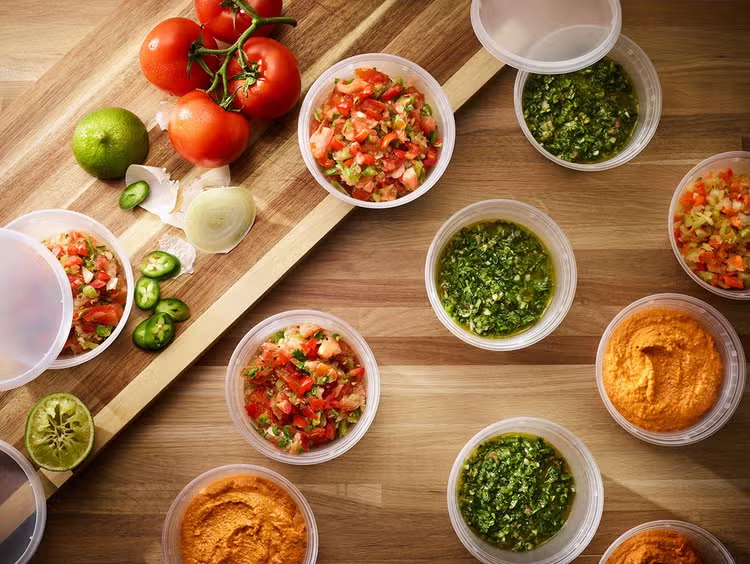
If yes, that’s a good sign because the American palate is hungry for new and bold flavors, and one of the most promising sources of inspiration are the countries and regions south of the U.S. border, not only Mexico but also Central America, the Caribbean and the distinct regions of Latin America.
According to Mintel, “fusion” menu items are on a three-year growth curve; Caribbean items are trending upward; and sauces are popular, as a carrier for interesting flavors that can be added or omitted to a dish to suit the chef or customer.
Melting Pot vs. Fusion
“Fusion” is a word that sometimes gets a bad wrap. Jamaican-born chef Andre Fowles prefers the term “melting pot” to describe a historical mixture of flavors in the Caribbean that have been created over history by Indigenous people, as well as colonizers, slaves, and indentured workers from Europe, Africa, China, Southeast Asia, and India.
Andre reserves the word “fusion” to refer to something born out of curiosity – an intentional experimentation across cultural traditions.
Historically, Caribbean cuisine is a mixture of heat, acid, salt and sweetness, drawn from chiles, tropical fruits (e.g., sour oranges, lime, pineapple), white vinegar and the palpable presence of garlic and other aromatics, like cilantro and culantro, allspice, cumin, parsley, mint, ginger and shallots.
In Jamaica, scotch bonnet peppers are the preferred choice, according to Andre, but chiles are a staple ingredient throughout the Caribbean, Mexico, Central America, and South America, with a wide variety of types growing plentifully throughout the region.
Like the Caribbean, other Latin regions have their own distinctive herbs and spices, for example, hoja santa in Mexico; or Mexican cinnamon, cilantro and epazote in Central America.
However, what ties Latin America and the Caribbean together is, in large part, the plethora of delicious foods that grow well throughout this part of the world: chiles as well as rice, corn, beans, peas and tubers.
Permission to Have Fun
Fusion – the purposeful layering of cultural cuisines – expresses itself today in all kinds of colorful creations throughout the Americas, for example, Vietnamese and Honduran influences in New Orleans, Louisiana, or the popular Korean taco in Los Angeles, California.
“Now that more Caribbean chefs are getting the spotlight in restaurants and on social media, I think we’re beginning to see more fusion foods,” Andre said. “There are lots of chefs taking Caribbean flavors and adding Italian or French techniques to them. It’s amazing to see!”
Think of fusion as an invitation to make your own foray into Latin and Caribbean cuisine, to experiment with new ingredients enhancing your own repertoire of savory dishes.
“Avoid being afraid and be sure to have fun,” says Alfredo Nogueira, executive chef at Cane & Table in New Orleans. “Cooking and eating are some of the things I get great joy from in my life. They don’t have to come with a rule book.”
Many chefs and restauranteurs may still worry about not being authentic or not being of Latin descent themselves. Can you dabble and still be respectful of Latin cultures?
René González, head chef at Imperfecto in Washington D.C., says Latin ancestry is not required. “Many Latin American and Caribbean chefs appreciate the interest in their culinary traditions from chefs of diverse backgrounds,” he explained.
But, René added, it can be helpful to have someone with a Latin or Caribbean background on the chef’s team for inspiration and guidance.
“There are so many talented chefs from Latin America and the Caribbean,” Andre notes. “So why not give them room to shine in these spaces?”
Salsas and Sauces
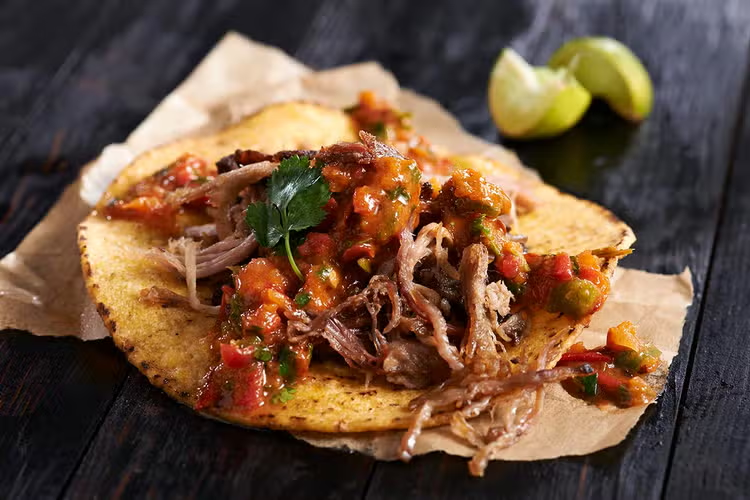
If you’re new to Latin cooking, a great place to start is with salsa, which is a Spanish word for sauce. It’s a broad category that relies on the region’s plentiful array of chiles.
René recommends starting with a known traditional recipe. “It’s a great way to honor and respect the culinary heritage of a particular culture. It allows you to learn the foundations, then explore creative ways to add your own twist while still paying homage to the original recipe,” he explained.
Andre adds to this perspective: “If you’re aiming for authentic flavors, then some things can be replaced but not other things. For example, a jerk dish requires allspice, scotch bonnet peppers, thyme, garlic, onion, green onion and ginger. There are a lot of other possible ingredients but these are foundational.”
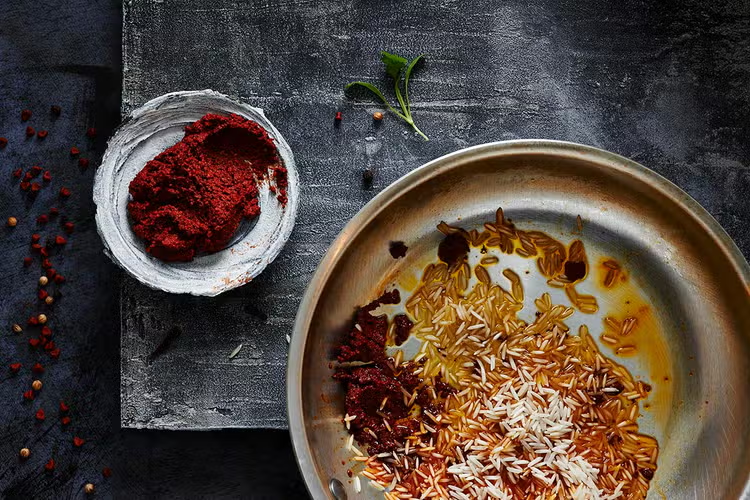
On the other hand, Amarys Koenig Herndon and Jordan Herndon, of Palm & Pine in New Orleans, offer another approach: Start with two different types of dried chiles. “Separately, toast them in the oven or a pan to bring out the oils. Throw them in water and let them sit. Then add salt and purée your chiles in a Vitamix blender. You can do a ton with just that,” Jordan said. “This is a great way to get to know the distinct flavors of each chile.”
“If you can just be comfortable knowing that what you are making is probably not authentic, then it’s a lot easier being an amateur exploring with these ingredients,” Jordan says.
In addition to chiles, René suggests a few other regional foods that may intrigue chefs from casual eateries: yuca (cassava), plantains, annatto (achiote), guava, sofrito and pupusas.
Chiles to Try
Each kind of chile has its own unique flavor, ranging from fruity and floral to smoky and earthy. Here are a few types to try.
René recommends:
- Serrano peppers – A bright, crisp heat, with a grassy, citrusy flavor.
- Guajillo chile – Known for its mild to moderate heat with notes of tangy berry and tea (René’s personal favorite).
Amarys and Jordan recommend:
- Dried Morita chiles – A dried and smoked jalapeños, a type of chipotle with an underlying fruity taste, not smoked as long as Chipotle Meco.
- Aji amarillo – A yellow Peruvian pepper that balances a lot of heat with “a clean vegetal flavor,” (according to Amarys), a very spicy but sweet pepper.
Andre recommends:
- Scotch bonnet peppers – Depending on the color of the peppers when you pick them (green, red, yellow, orange), they can be citrusy, and the spice level can vary (they pack heat but also bring lots of flavor). A tip: Cook the whole pepper with whatever you have in the pot so the flavor can seep out, then remove it before it bursts, avoiding some of the heat, which is mostly in the seeds.
Salsas, Spice Blends and Condiments to Try
Three offbeat favorites from Amarys and Jordan:
- Old Sour – A pepper condiment from the Bahamas, made with a fermented mixture of habaneros or scotch bonnets and lime juice (ideal for flavoring seafood).
- Huancaína sauce – Made with aji amarillo chiles and queso fresco cheese (often served over cold boiled potatoes or eggs).
- Chintextle salsa – A dried shrimp paste from Oaxaca, Mexico, made with purchased dried shrimp paste, toasted, toasted and puréed dried chiles, garlic and avocado leaves (or bay leaves). (Jordan says Chintextle salsa is a “flavor bomb” with many uses but, for starters, you can try it on tortillas or bread).
Two spice blends from Andre:
- Jerk seasoning – A seminal sauce in Jamaica, consisting of allspice, ginger, garlic, thyme, onion, green onion, scotch bonnet peppers, soy sauce, and brown sugar or molasses, plus (optional) cinnamon and nutmeg, blended in a Vitamix blender.
- Green seasoning – Similar to Haitian Sos Ti-Malice, it contains onion, green onion, thyme, lime juice or vinegar, cilantro, parsley, celery, scotch bonnet peppers, garlic, and bell peppers (used as a marinade for meats and to add extra flavor to stews, soups, and sauces).
Content and recipes developed in partnership with Chef Andre Fowles, Chef René González, Chef Amarys Koenig Herndon, Chef Jordan Herndon, Chef Alfredo Nogueira, StarChefs and Vitamix Commercial.