




Staffing shortages continue to put pressure on restaurant kitchens, with 62% of operators reporting too few employees to meet current demand. As budgets stay tight and service volumes hold steady, back-of-house teams need tools that help them move faster without increasing headcount.
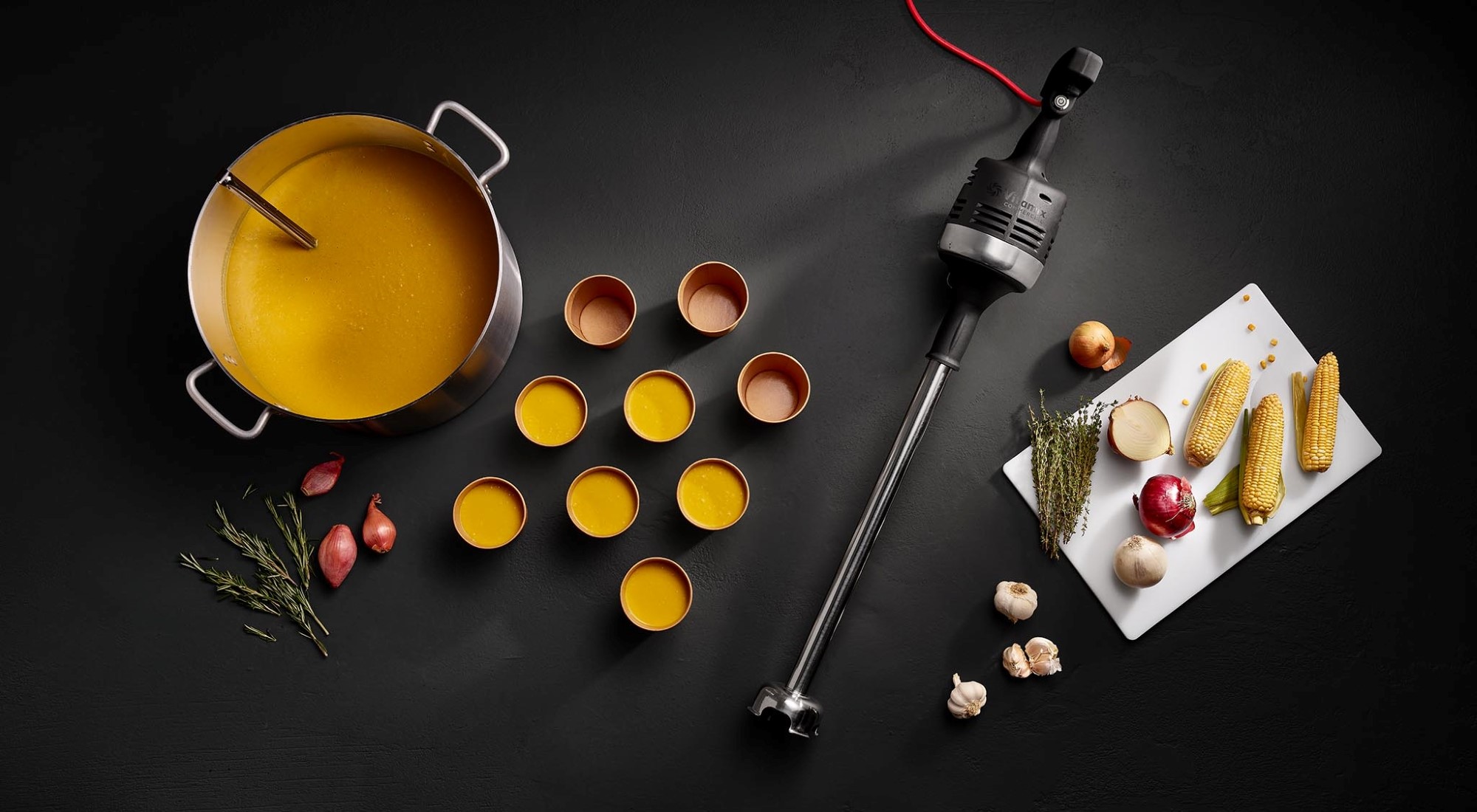
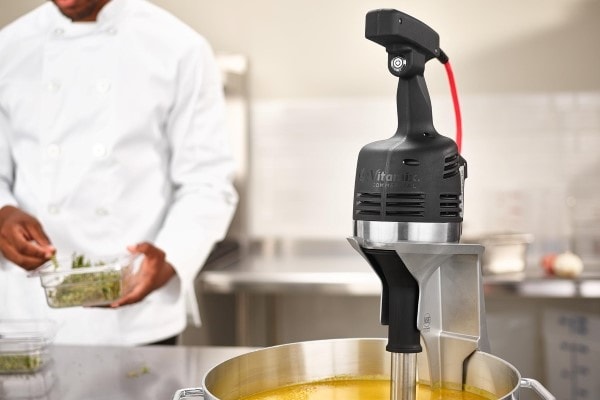
Immersion blenders are a prime example. By enabling your team to blend soups, sauces, and spreads directly in pots or other containers, they streamline high-volume prep, cutting down on cleaning and improving consistency. However, your kitchen won’t see their full impact without the right combination of people, processes, and technology. Here’s what to consider to get the most out using immersion blenders for prep.
People: Train teams to use immersion blenders effectively
Immersion blenders perform best in the hands of well-trained staff. Cooks should understand how ingredient order, liquid ratios and speed settings influence texture. Quick-reference guides or short onboarding videos can reinforce techniques and help new hires prepare before their first shift.
Training also prepares crews to adapt when variables shift, like adjusting batch sizes or modifying a recipe that blends differently than expected. With the right knowledge, teams blend faster and maintain consistency even during busy seasons.
Process: Build workflows that integrate immersion blenders seamlessly
Immersion blenders deliver the most value when they're intentionally built into prep routines. A few key steps can help your kitchen move faster, maintain quality and avoid unnecessary cleanup:
- Assign clear tasks to help crews use equipment efficiently and avoid confusion over responsibilities.
- Organize prep stations to ensure that immersion blending happens where it makes sense: near stovetops for hot items, or close to cold prep for sauces and bases. That way, crews can move through blending steps without relocating ingredients or crowding other stations.
- Standardize recipes and portion guides to reduce guesswork and keep output consistent across shifts. Whether blending 5 quarts or 50, a defined process helps staff replicate results regardless of who’s on the line.
Technology: Choose the right immersion blender for high-demand kitchens
Not all immersion blenders are built for the pace of commercial prep. Look for a model with features tailored to high-volume kitchens, including:
- Durability: You need an immersion blender that can handle dense ingredients without overheating or slowing down, and also stands up to heavy daily use without repairs or frequent downtime.
- Ease of use: An immersion blender should feel like an extension of the chef’s hand. Lightweight but powerful models with ergonomic grips can deliver the power crews need without inducing fatigue over long shifts. Also look for easy-to-clean shafts and components that speed cleanup and keep prep moving.
- Quality: When it comes to performance, the proof is literally in the pudding (or the sauce, or the soup). The best immersion blenders deliver consistent results across recipes, even when prep teams are working under pressure.
The operators who plan well, perform well
Efficiency in the kitchen doesn’t come from equipment alone. It’s the result of skilled teams, structured workflows, and reliable tools working together to keep prep moving and quality high.
The Immersi-Prep Series supports that system end to end, delivering the power and durability high-volume kitchens need to blend with confidence.
Explore how the Immersi-Prep Series can help your kitchen deliver consistent results with confidence.